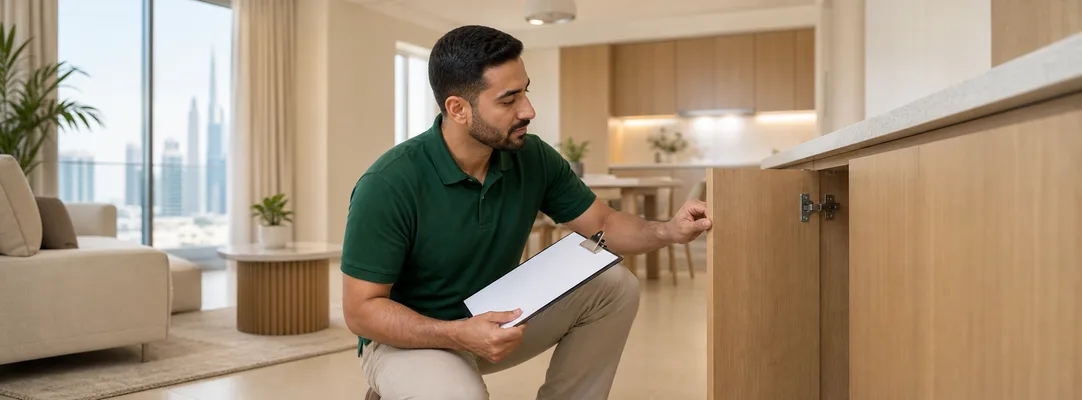
A useful home maintenance checklist does not assume that every mark, sound or loose fitting needs repair. Its purpose is to notice changes, separate urgent risks from routine work and create a clear record before a problem becomes harder to describe.
Dubai apartments and villas differ in age, equipment, landlord responsibilities and building rules. Manufacturer instructions, tenancy terms and building-maintenance schedules should take priority over a generic calendar. Use the intervals below as observation prompts, then adjust them for the property and installed items.
Deal with urgent warning signs first
Stop the routine inspection and contact the appropriate emergency, utility or building support if you find:
- Fire, smoke, severe sparking or a strong burning smell
- Water spreading toward sockets, appliances or electrical equipment
- Rapid flooding, sewage entering the home or water pouring through a ceiling
- A ceiling, wall, fitting or piece of furniture that appears unstable
- A repeated electrical trip accompanied by heat, damage, smell or sound
- A strong unidentified gas or chemical odour
- Broken glass, exposed wiring or another immediate injury risk
Do not touch wet electrical equipment, open a distribution board, remove fixed panels, enter a restricted service area or investigate above an unstable ceiling. An online maintenance booking is not an emergency response.
When an issue is contained, photograph it from a safe position, note when it began and avoid repeatedly recreating the symptom.
Build a flexible maintenance schedule
A routine is easier to follow when it has a few simple layers:
- During normal weekly cleaning: Notice fresh water, unusual odours, loose handles, slow drainage, appliance alerts and anything blocking a door or visible air opening.
- Once a month: Make a short room-by-room walk-through and compare the home with the previous month.
- Every three to six months: Review less-visible accessible areas, equipment records, user-maintenance instructions and postponed tasks.
- Before heavier AC use: Record cooling, airflow, sound and visible drainage changes, and follow the system instructions for any user-accessible filter.
- Once a year: Review the complete task list, manuals, previous work and recurring observations.
- After a specific event: Check after a power or water interruption, severe weather, long absence, appliance move, leak, renovation or contractor visit.
These intervals do not guarantee that faults will be prevented. Check an item sooner whenever its condition changes, and follow any different schedule required by its manufacturer, landlord or building management.
Kitchen maintenance checks
Look inside the sink cabinet without removing fixed panels. Check for fresh moisture, staining, swelling, odour or stored items that have become wet. Note whether a tap drips, a visible connection leaks or the sink drains more slowly than usual.
Do not tighten an unfamiliar connection, dismantle a trap or mix drain products. If a chemical has already been used, record its name for the service team. The guide to common plumbing issues in Dubai apartments explains how to describe leaks, pressure changes and drainage symptoms safely.
Check refrigerator and freezer doors, visible seals, alerts and cooling performance. Record error codes, new sounds, frost or water without opening internal panels. For a focused guide, read Refrigerator Not Cooling in Dubai? What to Check.
Inspect cabinet doors, drawer runners, handles and accessible shelves. A loose handle may fit a general handyman request, while plumbing, electrical or appliance faults should be routed to the relevant category.
Bathroom and plumbing checks
Observe how basins and showers drain during normal use. Note gurgling, recurring odours, water returning through another outlet or a change affecting several fixtures. Stop using a fixture if water is rising or spreading; do not keep testing it.
Check around taps, toilets, shower fittings and visible connections for drips, staining or dampness. Record whether a toilet continues running, a flush has changed or water pressure differs from its usual pattern.
Look at accessible sealant, grout edges, vanity units and nearby lower walls. A darkened joint or peeling finish does not confirm the source of moisture. Persistent damp, ceiling staining or water that may involve a shared pipe should also be reported to the landlord or building management.
Do not remove tiles, open a wall or ceiling, operate an unidentified valve or handle wastewater. Contained concerns can begin with Plumbing Services; uncontrolled water or contamination needs more urgent support.
Electrical fittings and lighting
Look only at accessible external surfaces. Record cracked covers, loose switches, discoloured sockets, flickering lights, fittings that no longer work or a breaker that has tripped.
If one outlet has stopped working, use the Dubai power-socket safety checklist to record the affected area and warning signs without opening or testing the fitting.
Do not remove a socket or switch cover, touch wiring, replace a breaker or use an extension arrangement as a permanent workaround. Stop using equipment that is wet, damaged, unusually hot or associated with smoke, sparking or a burning smell.
A repeated trip does not identify the cause. Note which rooms lost power, what was operating and whether the whole property or one area was affected. The circuit breaker keeps tripping guide provides a safe observation checklist.
For a wider outage, check approved building notices or contact reception. For a contained fitting or circuit concern, review Electrical Repair in Dubai.
Air conditioning and household appliances
Record AC performance under normal use instead of changing several controls to test it. Useful observations include weaker airflow, one room feeling different, a new sound, an error message, an unusual odour or visible water.
Follow the installed system's instructions for user-accessible filters and controls. The correct method and interval vary by equipment. Do not remove covers, reach into moving parts, improvise drainage work or assume refrigerant is the required solution. For routine observations, read Why Regular AC Checks Matter in Dubai.
For other appliances, record error codes, unusual sounds, leaks, heat, odours and the stage at which performance changed. Keep brand, model, manual and previous visit details available. Do not run extra cycles solely for inspection, force a door, pull out a heavy appliance or attempt internal electrical work.
Smoke, sparking, a burning smell, serious leakage or repeated circuit trips are reasons to stop using the equipment. Contained household-appliance concerns can start with Appliance Repair in Dubai.
Walls, ceilings, paint, doors and windows
Photograph new cracks, stains, bubbling paint or peeling areas with a date and nearby reference for scale. Compare the record over time, but do not decide from appearance alone whether the cause is cosmetic, structural, plumbing-related or related to condensation.
Before repainting a damaged area, read what to check before repainting peeling paint. Active damp or a changing crack may need assessment before decorative work begins.
Open and close normal household doors and windows without forcing them. Note sticking, scraping, loose handles, damaged stops or a latch that no longer aligns. Do not attempt work on exterior glazing, facade elements, fire-rated assemblies or high-level areas. Those may require the landlord, building management or a specialist.
Furniture and wall-mounted items
Check frequently used chairs, tables, beds, wardrobes and storage units for visible looseness, movement or missing fittings. Stop using an item that appears unstable and keep children away until its condition has been reviewed.
Do not improvise structural hardware or assume every cabinet should be fixed in the same way. Furniture instructions, item weight, wall material, concealed services, supplied fittings and building rules affect the scope. The furniture assembly decision guide covers these questions in more detail.
Look at accessible shelves, curtain fittings, mirrors and television brackets from floor level. Do not climb on unsuitable furniture, drill into an uncertain wall or tighten a fitting that is pulling away from the surface.
Apartment, villa and rented-home differences
Apartment residents may need building coordination for shared plumbing, central AC, common electrical systems, service-shaft access, contractor registration or permitted work hours. Report issues affecting several units or common areas through the appropriate building route.
Villa residents may have more private equipment and exterior areas, but should not climb onto roofs, inspect electrical enclosures, enter tanks or work at height. Use suitable specialist support for areas that cannot be viewed safely from ground level.
Tenants should check their agreement and obtain any required written approval before drilling, altering finishes, replacing installed equipment or authorising work on landlord-owned items. Do not assume responsibility from the type or price of a repair alone.
Checks before travel and after unusual events
Before an extended absence, follow building and manufacturer guidance for water, electricity, AC, appliances and access. Avoid turning off an unfamiliar system solely because a generic checklist suggests it. Leave the correct emergency and property contacts available.
After returning, or after rain, dust, a power interruption or renovation, look for new water marks, unusual odours, alerts, cooling changes, sticking doors and visible damage. Record when the change appeared without assuming the event caused it.
Before moving in or handing over a property, create dated photos and compare them with the inventory, tenancy terms and property instructions. Separate cleaning, painting, minor adjustments and specialist faults.
Prioritise and route the task list
Label each observation:
- Urgent: Immediate risk requiring emergency, utility or building support
- Prompt assessment: A contained leak, repeated trip, unstable item or worsening symptom
- Routine task: A minor adjustment, cosmetic item or planned request without immediate risk
- Monitor: A small stable change that can be photographed and reviewed, unless professional advice says otherwise
Do not hide specialist faults inside a vague handyman list. Use General Handyman Services for a mixed list of suitable minor repairs and adjustments; use the relevant plumbing, electrical, appliance, painting, cleaning, assembly or mounting category for specialist work. Compare all QuickFix services when the right category is unclear.
QuickFix reviews the description and confirms whether each task fits the current scope before scheduling. Several specialist categories may need separate scopes or visits.
Turn the checklist into a useful request
Create one line for every task and include:
- Room and affected item
- What changed and when it was first noticed
- Whether it is constant, intermittent or becoming worse
- Clear photos or a short video when safe
- Brand, model, dimensions or instructions where relevant
- Any water, heat, smell, error code or electrical trip
- Recent leaks, drilling, renovation, moving or contractor work
- Parts already available
- Ownership and landlord approval requirements
- Reception, parking, permit, lift and working-hour rules
- A preferred appointment date or time window
A requested time remains a preference until confirmed. Diagnosis, parts, work method, price and duration may depend on the property condition and assessment.
Keep a dated record of completed work, supplied terms, model information and recurring symptoms. A checklist cannot prevent every household fault, but it can make changes easier to identify, route and explain.
For a contained list of suitable minor tasks, submit a general handyman request. Use the appropriate emergency, building or utility support first whenever there is immediate danger.