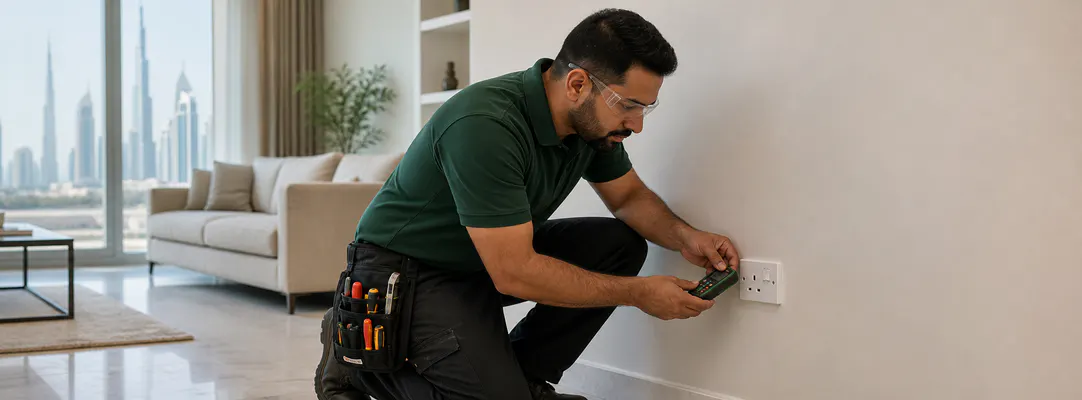
A power socket that stops working may affect one appliance, several outlets, an individual room or a wider part of the property. The visible symptom does not establish whether the socket, connected equipment, circuit or building supply is responsible.
You do not need to diagnose the fault before requesting help. A safer and more useful approach is to record what happened, avoid recreating the problem and explain which parts of the property appear affected.
QuickFix reviews suitable non-emergency requests through Electrical Repair in Dubai. The following checks are observational only. They do not require opening a fitting, using electrical test equipment or touching wiring.
Look for urgent warning signs first
A socket that appears normal but no longer supplies power is different from a fitting associated with heat, smoke or electric shock. Move away from the area and contact the appropriate emergency or building support promptly if there is:
- Fire, smoke or visible burning
- Severe or continuing sparking
- An electric shock or tingling sensation
- A strong burning or melting smell
- Unusual heat around the socket, plug or nearby wall
- Buzzing, crackling or another abnormal electrical sound
- A blackened, melted, swollen or visibly damaged fitting
- Water, active moisture or a spreading leak near the socket
- A loose fitting exposing an internal space or component
- Any immediate danger to occupants or the property
Do not touch wet or damaged electrical equipment, approach an active fire or use an online booking form as an emergency response. Keep other occupants away and follow the instructions of the appropriate emergency, utility or building contact.
If someone has received an electric shock, seek the appropriate medical or emergency assistance. Do not touch the affected fitting or reconnect the equipment involved.
Identify the extent without testing the fault
Record what you already know through ordinary use. State whether the concern appears limited to:
- One socket
- More than one socket in the same room
- Several fittings in different rooms
- A socket and nearby lighting
- One connected appliance
- An entire room or part of the property
- The whole apartment or villa
Do not plug equipment into a visibly damaged socket to see whether it works. Do not move an appliance associated with heat, sparking, water or a burning smell to another outlet for comparison.
A wider loss of power may relate to the property, building or utility supply rather than a single socket. Check approved building notices or ask reception or building management whether an interruption has been reported. Avoid entering a restricted electrical room, opening a meter cabinet or investigating shared building equipment.
Record when and how the problem appeared
A short timeline can help the service team understand the request before arranging an assessment. Note:
- When the socket last worked normally
- When the problem was first noticed
- Whether it stopped during ordinary use
- Which device was connected at the time
- Whether the issue is constant or intermittent
- Whether a plug felt loose during earlier normal use
- Any sound, smell, heat or visible change noticed safely
- Whether another fitting or room changed at the same time
- Whether the property recently had a power interruption
Do not repeatedly operate the socket, switch or connected device to make the fault happen again. A fault that appears only sometimes still needs to be described; it does not need to be recreated for a photograph or video.
Where there is no immediate danger, a clear photo from a normal safe position may help show the socket location and visible external condition.
Note recent water, cleaning or renovation work
Electrical symptoms can appear after an event elsewhere in the room or property. Record whether the issue followed:
- A plumbing leak or overflowing fixture
- Water entering from another apartment or a shared area
- Wall or floor cleaning near the fitting
- Painting, drilling or wall repair
- Furniture installation or movement
- Appliance installation or relocation
- Work on another socket, switch or light
- A wider maintenance visit or renovation
These details do not confirm what caused the socket to stop working. They help identify whether another party, property area or service scope may also need consideration.
Water close to electrical equipment is a safety concern rather than a routine booking detail. Do not touch the water or nearby fitting, place a container beside powered equipment or attempt to dry the socket. Move away and contact the appropriate emergency or building support.
Separate the socket symptom from an appliance problem
A device that does not start does not automatically prove that the wall socket has failed. The device, plug, cable, socket, circuit or another condition may be involved.
Record the connected item's type, brand, model and any displayed error message. Stop using equipment that is wet, damaged, unusually hot or associated with smoke, sparking, burning smells or repeated electrical interruptions.
Do not dismantle the appliance, change its plug, open its casing or move it between sockets as a trial. If the concern appears limited to an appliance rather than a fixed fitting, the guide to common appliance problems in Dubai homes explains which symptoms and model details can help route the request.
QuickFix can review the description and determine whether the request should begin with appliance assessment, electrical repair or another appropriate contact. The correct route should be confirmed rather than guessed from one symptom.
Treat a breaker trip as a separate warning
A socket problem may be noticed at the same time as a circuit breaker or another protective device operates. That event should be included in the request, but it does not identify the defective component.
Do not repeatedly reset a breaker to restore the socket when the cause is unknown. Do not remove the distribution-board cover, touch internal components, replace a protective device or attempt to keep it in an operating position.
Record which rooms or equipment were in use before the event and whether the trip happened more than once. Use the Dubai circuit-breaker warning-sign guide for a focused list of safe observations and situations that require urgent support.
Do not open or modify the socket
A socket faceplate covers electrical connections that should not be exposed by an occupant. Do not:
- Remove or loosen the faceplate
- Touch internal wiring or terminals
- Insert a tool, wire or object into the socket
- Apply tape, adhesive or filler as a repair
- Replace the socket or switch yourself
- Use an improvised plug, adapter or connector
- Bypass a protective device
- Continue using a scorched, loose or cracked fitting
- Run an extension lead as a permanent workaround
- Cover the fitting while it is hot or damaged
A loose or damaged plug should not be forced into place.
Avoid advice based only on the socket's appearance or a photograph. An appropriate assessment may be required before the affected component, repair method and safe return to use can be confirmed.
Consider the property and building arrangement
Apartment residents may need to contact building management when several units are affected, a common electrical area is involved, access to shared equipment is required or the building controls contractor registration and working hours.
Tenants should notify the landlord or property manager through the relevant process and confirm authority before approving changes to a fixed fitting. Keep any inventory, move-in condition record or earlier maintenance note that identifies the socket's previous condition.
Villa occupants should also avoid meter enclosures, exterior electrical boxes and equipment in restricted or wet locations. State whether the affected fitting is indoors, outdoors, in a kitchen, near a bathroom or beside another water source.
For broader property checks, the annual Dubai home-maintenance checklist can help record the socket concern alongside any related appliance, plumbing or wall condition without combining them into one assumed diagnosis.
Prepare a clear electrical repair request
When there is no immediate danger and the area is ready for review, include:
- Dubai area, property type and building name
- The affected room and socket location
- Whether one or several fittings appear affected
- When the problem began
- Whether it is constant or intermittent
- The device connected when it was first noticed
- Any visible external damage recorded safely
- Any heat, smell, sound, smoke or sparking
- Whether a breaker or wider power interruption was noticed
- Recent leaks, cleaning, drilling, painting or renovation
- Appliance brand, model and error message where relevant
- Whether building management or the utility has been contacted
- Photos taken only when safe
- Parking, permit, reception and working-hour requirements
- Preferred appointment date or time window
A requested date remains a preference until confirmed. The cause, required work, parts, price and completion time may depend on an on-site assessment and the condition of the fitting, circuit and property.
Keep the area ready for assessment
Leave a socket associated with damage or an unexplained fault alone. Keep children and pets away, and do not place furniture, fabric or belongings against the fitting.
Clear a normal route to the room only when this can be done without approaching an unsafe area or moving heavy connected equipment. Do not reconnect a device that was removed after smoke, sparking, heat, water or another warning sign.
Keep any relevant appliance details, building notices and earlier maintenance records available.
The safest sequence is to recognise urgent warning signs, record the extent and timeline, avoid testing or opening the fitting, notify the relevant building contact and request an appropriate electrical assessment.
Review QuickFix electrical repair guidance or submit an electrical repair request.