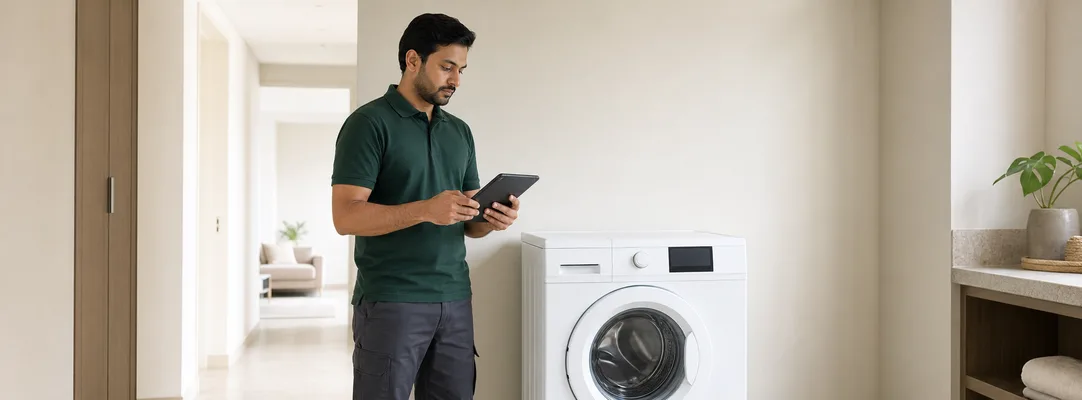
When a household appliance stops working normally, the best first step is to describe what you can observe rather than guess which component has failed. “The washing machine stops before draining and shows an error” is more useful than “the pump is broken.” The same symptom can have several causes, and the appliance type, model, installation and recent events all affect the assessment.
This guide helps Dubai residents recognise common appliance problems, separate urgent warning signs from routine requests and prepare clear information for a service review. It is not a diagnosis or a set of instructions for opening or repairing an appliance.
Address urgent warning signs first
Stop using the appliance and move away from it if there is fire, smoke, serious sparking, an electric shock, a strong burning smell, an unidentified gas smell or unusual heat around a plug, cable, switch or socket. If someone has received an electric shock, contact the appropriate medical or emergency service and do not touch the appliance again. Water reaching electrical equipment, a major spreading leak and visible damage after an appliance has fallen also need prompt attention.
Do not touch wet electrical equipment, operate a damaged control, repeatedly reset a circuit breaker or open a cover to investigate. Keep children and pets away from leaking, hot, unstable or damaged equipment. If there is immediate danger, use the appropriate emergency, utility, building-management or specialist route; an online appliance booking is not an emergency response.
When there is no immediate hazard, stop the normal programme only if its user-facing control is safe to reach. Do not continue running the appliance simply to reproduce smoke, a severe noise, a leak or an electrical trip for a video.
Confirm the appliance and service scope
Record the appliance type, brand, full model number and whether it is freestanding or built in. Check whether it belongs to you, a landlord or a furnished property, and whether a retailer or manufacturer process still applies. Keep warranty documents and previous service records available, but do not open the appliance to find a label that is not safely accessible.
QuickFix reviews the appliance type, model and reported symptom, then confirms whether the appliance and fault fall within the current service scope before scheduling. The category does not automatically mean that every brand, model, gas appliance or small electrical product is covered.
Describe the symptom instead of diagnosing a part
Write down what changed, when it began and which stage of operation is affected. Useful observations include:
- Whether the appliance starts, fills, heats, cools, drains, spins or completes its programme
- The exact error code, warning light or alarm
- A new sound, vibration, odour, heat, frost or visible water
- Whether the problem is constant or intermittent
- The last time the appliance worked normally
- Any recent move, installation, cleaning, power interruption, water interruption or nearby work
- Whether another appliance, socket, drain or part of the property is affected
Take clear photos of the whole appliance, model label and display when they are safely visible. A short video can document a repeatable, non-dangerous sound. Error meanings vary by brand and model, so record the code exactly and consult the manual for that specific appliance rather than relying on instructions for a similar model.
Refrigerator and freezer symptoms
Common reports include weak cooling in the refrigerator, freezer or both, heavy frost, water, an alarm, a door that does not close normally or an unfamiliar sound. Note which compartment is affected and when the change started. Keep door opening to a minimum and protect temperature-sensitive food according to current food-safety and product-storage guidance.
Do not remove panels, chip ice with a sharp object, apply an improvised heat source or add refrigerant. The focused refrigerator-not-cooling guide covers safe observations, food protection and the details to prepare.
Washing-machine and washer-dryer symptoms
For a washing machine or washer-dryer, state exactly where the cycle changes. Does it fail to start, appear not to fill, stop during washing, remain full of water, fail to drain or spin, leave clothes unusually wet or show an error? Also report a new knocking, grinding or repeated clicking sound, stronger-than-usual movement, a door problem or visible water.
For a focused response when water remains in the drum, follow the washing machine repair guide for Dubai homes.
For a leak, note whether water appears during filling, washing, draining or spinning and whether it is at the front, rear, side or beneath the appliance. Its position does not prove which part or connection is responsible. Do not run another cycle just to recreate the leak.
Never force the door, reach into a drum that may move, tilt the appliance or remove a panel. Use a filter or user drain procedure only when the exact model manual identifies it as normal user maintenance and there is no electrical, contamination or lifting risk. A machine that vibrates does not by itself confirm a failed part; include the load type and whether the appliance was recently installed or moved.
Dishwasher, dryer and other appliance examples
A dishwasher request may describe failure to start, water remaining after the programme, poor washing, an unfamiliar sound, an error, a door that will not latch or water around the unit. Do not remove an integrated dishwasher, mix cleaning chemicals or add a generic drain product. Standing water may contain detergent and food residue, so keep children and pets away and avoid unnecessary contact.
For focused guidance on drainage, cleaning, leaks and drying, read Dishwasher Repair in Dubai: Common Problems & Safe Checks before preparing your request.
For a tumble dryer, note whether the drum turns, the programme completes, clothes remain damp or the appliance becomes unusually hot. Follow only the manual’s routine instructions for a lint filter, water container or other user-accessible item. Smoke, a burning smell or abnormal heat means the dryer should remain out of use.
For an oven, cooker, microwave or countertop appliance, first state whether it is electric, gas or combined. Do not touch a surface to test heat, remove a casing or attempt internal microwave, gas, combustion or electrical work. If gas is suspected, move away and follow the appropriate emergency, utility and building procedure. QuickFix must confirm coverage for these appliance types before a visit is arranged.
Appliance will not start, loses power or shows an error
A blank display or failure to start may involve the appliance, its controls, the connection or the property supply. Review only the normal controls and the exact model manual. Do not use a wet, loose, damaged or overheated plug or socket, improvise an extension arrangement, pull a heavy appliance forward just to reach its plug or try hidden reset sequences found for another model.
If several rooms or appliances are affected, check approved building notices or contact reception or building management. Repeated breaker trips should not be treated as a reset routine; use the circuit-breaker warning-sign guide and request electrical repair when a fixed socket, circuit or fitting appears involved.
Treat appliance leaks and water connections cautiously
Water beside an appliance can come from the appliance, an accessible hose, a fixed water connection, nearby plumbing or another source. Record when it appears, its approximate amount and spread, whether a nearby sink or drain is also affected and whether the water looks clean or contaminated. Do not diagnose the source from its visible position alone.
Do not move heavy equipment, disconnect a pressurised hose or operate an unfamiliar valve. A valve should be used only when it is clearly identified, safely accessible and you know that it controls the affected appliance. Water near electrical equipment or a major shared leak needs a safety or building response before routine booking.
A contained appliance concern can begin with Appliance Repair. A visible fixed connection or wider drainage issue may need Plumbing Services, while water entering from a wall, ceiling or shared service should also be reported to building management.
Note new noise, vibration, heat and odour
Describe a sound in simple terms and state when it occurs: on startup, while filling, during rotation, when draining or near the end of a programme. Record whether the appliance has moved, become less stable or started touching nearby cabinetry. Do not hold, tilt or reach behind operating equipment to locate a sound.
Unusual heat, a burning odour, smoke or serious sparking is a stop-use warning, not a normal booking detail to investigate yourself. Other odours can have more than one source, so report what you noticed without applying chemicals, lubricants or improvised cleaners inside the appliance.
Route air-conditioning questions to the focused guides
For an AC request, include the unit type and whether the system is private, central or shared. Record weak airflow, poor cooling, visible water, an error, sound or odour without removing a cover or improvising drainage work. Shared equipment may need building-management review.
Use Why Regular AC Checks Matter in Dubai for routine observation and record-keeping. If a recurring assessed fault has already raised a bigger decision, read AC Repair vs Replacement in Dubai.
Plan for built-in appliances and rented homes
Do not pull out a built-in or heavy appliance or remove surrounding cabinetry before a visit. Tell the service team about restricted access, fixed panels, stacked equipment and any reception, parking, lift, permit or working-hour rules. For a rented or furnished home, confirm whether the landlord or property manager needs to authorise the work and who owns the appliance.
These details can affect access and routing even when they do not identify the fault. They also help avoid arriving for work that requires a different property contact or service category.
Prepare a useful appliance repair request
For a contained, non-emergency problem, include:
- Dubai area, property type and building name
- Appliance type, brand, model and approximate age
- Whether it is freestanding, integrated or part of a shared system
- Exact symptom, affected programme and when it started
- Error code, warning light, water, frost, sound, odour, heat or vibration
- Recent power, water, installation, move, cleaning or repair event
- Safe photos and a short video if the symptom can be shown without another test
- Ownership, warranty or retailer process and previous service history
- Landlord, property-manager and building-access requirements
- Preferred appointment date or time window
Ask how the initial assessment and pricing process work, whether parts would be quoted separately and how any additional work would be approved. A description can help prepare the visit, but the diagnosis, compatible part, final price and completion time may depend on assessment and availability.
What should you do before the visit?
Keep a dry, clear route to the appliance and move loose belongings from nearby accessible areas. Do not disconnect services, dismantle cabinetry, pull out a heavy unit or empty potentially contaminated water unless appropriate guidance confirms it is safe. Keep the manual, model details and service records ready, and disclose any electrical trip, leak, gas concern, burning smell or temporary workaround in advance.
Add appliance observations to the wider annual home-maintenance checklist so changes and previous visits are easier to compare.
Common appliance-problem questions
Can a photo or error code confirm the repair?
Usually not by itself. It helps identify the model and prepare questions, but similar symptoms can have different causes. Record the exact code and visible condition without opening the appliance.
Should I run the appliance again before requesting help?
Not when the issue involves smoke, sparking, heat, a burning smell, electrical trips, a serious leak, violent movement or another safety concern. For a minor non-dangerous symptom, follow only the exact model manual and do not run a cycle solely to make the fault happen again.
Who should handle a leak or power problem?
It depends on what is affected. A contained appliance symptom may start with appliance review; a fixed water connection, wider drain, damaged socket, repeated circuit trip or shared building system may need plumbing, electrical or building support instead.
The clearest request explains what happened, when it happened and what else was affected. For a non-emergency household appliance concern, review the QuickFix appliance service or submit an appliance repair request.