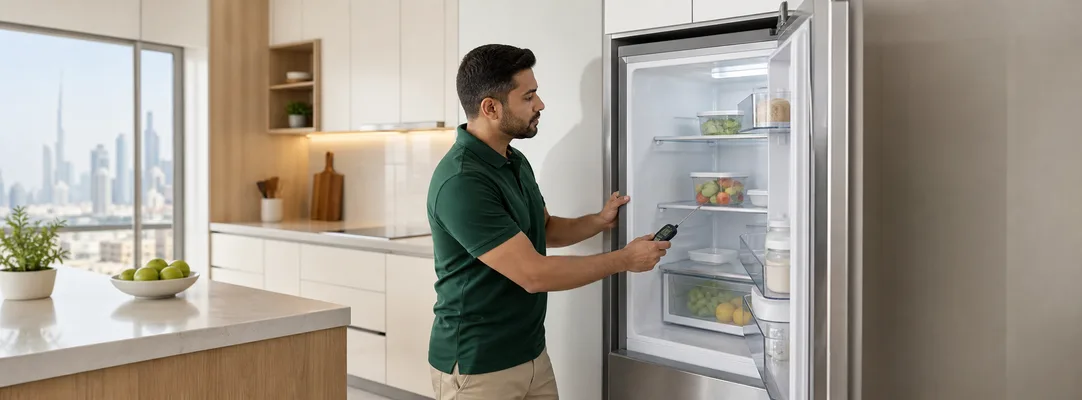
A refrigerator that feels warmer than normal needs prompt attention, but the temperature change does not reveal the cause by itself. The problem may affect the fresh-food section, the freezer or both, and it may be sudden, intermittent or gradual.
Start by protecting people and stored food. Then record the symptoms and review only the controls and areas that the manufacturer describes as user-accessible. Do not dismantle the appliance, guess which component has failed or attempt electrical or refrigerant work.
Check for urgent warning signs first
Stop using the refrigerator and contact the appropriate emergency, building or technical support if there is:
- Smoke, fire or serious sparking
- A strong burning smell
- A scorched, damaged or unusually hot plug, cable or socket
- Water reaching a plug, socket or electrical equipment
- Repeated circuit-breaker trips associated with the appliance
- A major leak spreading across the floor or toward another property
- Visible damage after the refrigerator has fallen, been struck or been moved
- Any other immediate danger to occupants or the property
Do not touch wet electrical equipment, reach behind the refrigerator, remove a cover or repeatedly reset a breaker. Keep children and pets away. If there is fire or immediate danger, move to a safe place and use the appropriate emergency support instead of waiting for an online appointment.
A breaker trip does not confirm whether the refrigerator, socket, circuit or another component is responsible. The Dubai circuit-breaker guide explains what to record without recreating the fault.
Protect chilled and frozen food
Keep the refrigerator and freezer doors closed as much as possible while deciding what to do. Frequent opening lets more warm air inside and makes it harder to judge how the appliance is performing.
Move perishable items to reliable cold storage when necessary. Follow current official food-safety guidance and the instructions for each product. Do not taste food to decide whether it is safe, and do not rely only on smell or appearance. When the storage history is uncertain, seek appropriate guidance rather than guessing. The FDA provides detailed food safety guidance for power outages.
Medicines and other temperature-sensitive items may have different storage requirements. Follow their labels and contact the relevant pharmacist, supplier or healthcare provider if the required conditions may not have been maintained.
Define exactly what is not cooling
Before changing a setting, note what you can observe:
- Is the fresh-food compartment warm while the freezer remains cold?
- Are both compartments warmer than expected?
- Is cooling intermittent rather than continuously poor?
- Are some items freezing while other areas feel warm?
- Did the change begin suddenly or develop over several days?
- Did it follow a power interruption, appliance move, cleaning or long-open door?
- Is an error code, warning light or alert displayed?
- Is there heavy frost, visible water or an unusual sound?
- Does the door appear to close fully?
These patterns help describe the request, but they do not confirm a failed part. Avoid stating that the refrigerator "needs gas," a compressor, a sensor or another component unless that conclusion comes from an appropriate assessment.
Review power and controls safely
A working interior light or display confirms only that some power is reaching part of the refrigerator. It does not prove that the cooling system is operating normally.
If there is no immediate danger, note whether the display and interior light work and whether other equipment in the home has also lost power. Check building notices or contact reception when the wider property appears affected.
Do not pull a heavy refrigerator away from the wall solely to inspect its connection. Do not touch a wet, loose, damaged or overheated plug or socket, improvise an extension arrangement or repeatedly unplug and restart the appliance.
Review the manual for the installed model. Confirm that the visible control has not been changed accidentally and that any holiday, vacation or similar mode is set as intended. Record the displayed setting and error code before making a user-permitted adjustment. Avoid hidden reset sequences or instructions written for another model.
If the refrigerator is newly installed or was transported recently, follow the startup and positioning instructions supplied for that exact model. Handling requirements can vary.
Check the door, seal and visible airflow openings
Food containers, shelves, drawers or packaging can prevent a door from closing completely. Without forcing anything, check whether an item is obstructing the door and whether removable parts appear to be sitting normally.
Inspect the visible door seal for food residue, a folded section, a gap or obvious damage. Clean it only as directed by the manual. Do not remove the seal, loosen hinges or attempt to realign the door yourself.
Some refrigerators circulate cold air through openings inside the compartments. Check whether food or packaging is pressed directly against a visible vent and arrange items only as the manual allows.
Do not remove an internal panel to search for a fan or hidden ice. Never use a knife, screwdriver or another sharp object to remove frost, and do not apply a hair dryer, open flame, boiling water or improvised heater. If heavy frost is visible, photograph it when safe and follow only the model-specific user instructions.
Record sounds, frost, water and odours
Useful observations include repeated clicking, an alarm, a new rattling or buzzing sound, long periods of apparent silence, heavy frost, water inside a compartment, an error code or an unusual odour.
A short video can help document a repeatable sound, but do not repeatedly operate the refrigerator to recreate it. Photograph only accessible external and internal areas; never remove a panel or reach toward a moving component.
Water near a refrigerator may relate to the appliance, a connected water supply, nearby plumbing or another source. Its location alone does not confirm the cause. If water is spreading, entering cabinetry, affecting a neighbouring property or approaching electricity, contact the appropriate building or urgent support. A fixed water-supply concern may also need plumbing service guidance.
Also record whether the cooling change followed a power interruption, appliance move, large delivery of room-temperature food, long-open door, cleaning, control change, kitchen work or previous repair. A simple timeline is more useful than an unconfirmed diagnosis.
Decide who should receive the request
A contained cooling problem in a household refrigerator can start with QuickFix Appliance Repair. QuickFix can review the appliance details and reported symptom, then confirm whether the request falls within the current service scope.
Another contact may need to be involved first:
- Building management when several apartments have a power issue or restricted access is required
- A landlord or property manager when the refrigerator belongs to a furnished rental
- The retailer or manufacturer when a supplied warranty may still apply
- An electrical service when a socket, circuit or repeated breaker trip needs assessment
- Plumbing or building support when a water connection or spreading leak is involved
- Emergency support when there is fire, smoke, serious sparking or immediate danger
Keep warranty documents available and follow the relevant tenancy or supplier process before authorising work on an appliance you do not own.
Avoid unsafe or misleading DIY repairs
Until the cause has been assessed, do not:
- Remove rear, lower or internal appliance panels
- Touch wiring, fans or internal electrical components
- Cut, bend, puncture or heat any tube
- Add refrigerant or use a generic recharge product
- Bypass a switch, sensor, fuse or safety feature
- Replace a component based only on an online video
- Chip ice with a sharp or metal tool
- Tilt or move a heavy refrigerator without suitable help
- Use repeated power cycling as a workaround
One symptom can have several possible explanations. The required part, repair method, price or completion time may depend on assessment and parts availability. For a wider household-appliance overview, read Common Appliance Breakdowns in Dubai Homes.
Prepare a useful repair request
For a non-emergency refrigerator concern, include:
- Dubai area, property type and building name
- Whether the refrigerator is freestanding or integrated
- Brand and complete model number
- Serial number if requested and safe to photograph
- Approximate age and who owns the appliance
- Whether a supplier warranty may apply
- When the cooling change was first noticed
- Whether the fridge, freezer or both are affected
- The visible setting, display reading or error code
- Whether the door closes normally
- Any frost, water, odour, alarm or unusual sound
- Any recent power interruption, move, cleaning or repair
- Clear photos or a short video when safe to capture
- Parking, reception, permit and contractor-access requirements
- Landlord or property-manager approval requirements
- A preferred appointment date or time window
A requested time remains a preference until confirmed. Photos can support the initial review, but they may not confirm the fault, required parts or complete scope.
Prepare the area and keep a record
Protect the food and maintain a clear, dry route to the appliance. Remove loose items from nearby counters or flooring, but do not pull the refrigerator out or dismantle cabinetry unless the service team and property contact agree on the preparation.
Keep the manual, model details, previous visit notes and warranty information available. Tell the service team about any water, electrical trip, damaged connection, odour or temporary workaround before the visit.
After assessment, save the confirmed scope, visit notes, parts information and any terms supplied for the work. The Dubai home maintenance checklist can help organise appliance observations with other household tasks.
For a contained, non-emergency concern, review the refrigerator repair guide or submit a refrigerator repair request.