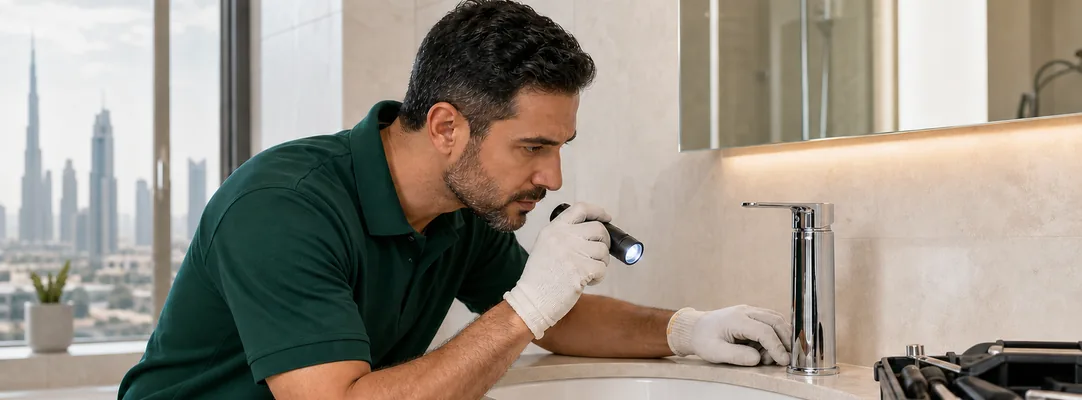
Plumbing issues in a Dubai apartment can range from a dripping tap to water entering through a ceiling. The visible symptom does not always identify the source, especially where several apartments share pipework, drainage routes, service shafts or hot-water equipment.
You do not need to diagnose the fault before requesting help. A more useful first step is to record what can be seen safely: the affected fixture, when the problem began, whether it is getting worse and whether one or several areas are involved.
QuickFix reviews non-emergency household requests through its Plumbing Services in Dubai category. The information below can help you describe the issue clearly and decide whether a routine plumbing request, building management or urgent support is the appropriate next contact.
Check for urgent warning signs first
A contained drip is different from uncontrolled flooding or wastewater returning into the apartment. Do not wait for an online appointment when there is an immediate risk to people, neighbouring units or the property.
Move away from the affected area and contact the appropriate emergency, utility or building support promptly if there is:
- Rapid or uncontrolled water flow
- Sewage or wastewater backing up into the apartment
- Water spreading toward sockets, appliances or electrical equipment
- Water pouring through a ceiling, wall or service opening
- A ceiling that appears heavily swollen, bowed or unstable
- Very hot water creating an immediate scalding risk
- Smoke, sparking, a burning smell or electrical danger near water
- Strong chemical fumes, heat or a reaction after drain products were used
- Any other immediate danger to occupants or surrounding properties
Do not walk through contaminated water, touch wet electrical equipment or enter a restricted building service area. If an accessible isolation control is familiar to you and building guidance confirms that it is safe to operate, it may help limit water flow. Do not experiment with an unidentified valve or dismantle a fitting while water is escaping.
1. Visible leaks from taps, fittings or connections
A visible leak may appear around a tap, beneath a sink, beside a toilet, at an exposed connection or inside an accessible cabinet. Record the exact point where water first becomes visible rather than assuming which internal part has failed.
Useful details include whether the leak is a slow drip, a steady flow or only appears when the fixture is used. Note whether the water looks clear, has an unusual colour or smell, and whether it is collecting on flooring, cabinetry or a wall.
If the area is safe to approach, move dry belongings away and place a suitable container beneath a minor clean-water drip. This is only temporary protection, not a repair. Keep children and pets away, and do not tighten, loosen or remove a connection unless it is specifically intended for normal user operation and you are certain it is safe.
Take a wide photo showing the fixture and a closer photo of the visible leak. A short video may help show an intermittent drip, but do not keep running water simply to recreate the problem.
2. Slow or blocked sinks, showers and floor drains
A drainage issue may begin with water taking longer to clear, gurgling sounds, an unusual smell or water rising in another nearby fixture. State whether the change affects one outlet or several. Multiple drains slowing at the same time can be important information because the relevant drainage route may extend beyond one fixture.
Stop using an outlet that is not draining normally. Repeatedly adding water can cause an overflow and spread contaminated material into cabinets, flooring or neighbouring rooms.
Avoid mixing drain cleaners, bleach or other chemicals. Do not pour an unidentified product into standing water, force wire or improvised tools into the drain, or dismantle a trap to search for the blockage. If any product has already been used, provide its name where known and tell anyone attending before work begins.
For a focused response guide, including contamination warnings and building-management considerations, read Blocked Drain in Dubai? Safe Steps Before Calling a Plumber.
3. A toilet that keeps running or becomes blocked
A running toilet may send water continuously or intermittently into the bowl. A flushing problem may involve a weak flush, a bowl that fills unusually high or water that does not clear normally. These symptoms should be described separately because they do not confirm the same cause.
For a running toilet, note whether the sound is constant and whether it stops temporarily. Avoid dismantling the cistern or forcing an internal component. Mention whether an external isolation valve is visible, but do not operate an unfamiliar or stiff valve.
For a blocked toilet, stop using it and ask other occupants to use another bathroom if available. Do not keep flushing to test the water level. Avoid chemical cleaners and improvised objects, particularly when the bowl already contains standing water.
Wastewater overflowing from a toilet is not a routine contained repair. Keep people away from the affected area and contact the appropriate building or urgent support if contamination is spreading or several fixtures are backing up.
4. Low, high or changing water pressure
Water-pressure changes are easier to review when the pattern is clear. Check through normal use whether the difference affects one tap, one room or several fixtures. Note whether it occurs with hot water, cold water or both and whether it is constant or more noticeable at certain times.
Do not remove tap parts, alter a pump, open service panels or adjust building controls to investigate. The cause cannot be confirmed from pressure alone and may relate to a fixture, an apartment connection, planned work or a wider building condition.
Ask reception or building management whether there is a known interruption, tank or pump work, or another issue affecting multiple units. If neighbours have noticed the same change, include that information without treating it as a diagnosis.
A sudden severe change, water hammer accompanied by visible movement, or a leak that begins after a pressure change should be reported promptly. Stop using the affected fixture if continued use appears to worsen the problem.
5. Hot-water temperature or performance changes
A hot-water concern may appear as no hot water, water taking longer to warm, an unstable temperature, reduced hot-water pressure or an unusual colour or smell. Record whether it affects every hot tap or only one outlet.
State whether the apartment uses an individual heater or a central building system if you know, but do not open a heater casing or access shared equipment. Avoid changing unfamiliar controls or repeatedly increasing the temperature to compensate for inconsistent performance.
Water that is unexpectedly very hot presents a scalding risk. Stop using the affected outlet and keep children and vulnerable occupants away. A leak from hot-water equipment, smoke, a burning smell or water close to electrical components requires appropriate urgent or building support rather than routine testing.
For a shared hot-water system, building management may need to confirm whether other units are affected and who controls access to the relevant equipment. QuickFix can review the reported symptoms and confirm whether they fit the available plumbing scope.
6. Damp marks, peeling paint or ceiling stains
A stain does not prove that a concealed pipe is leaking. Moisture may appear near plumbing routes, bathrooms, kitchens, air-conditioning drainage, an exterior surface or an apartment above. The source and repair scope may require coordination before any wall finish is addressed.
Photograph the whole wall or ceiling and then the affected area. Record the date, whether the mark looks different over time, whether it changes after a fixture is used and whether there is an affected room on the opposite side.
Do not puncture a blister, press a bulging ceiling, remove wall material or paint over an active mark. Contact building management when water appears to come from above, a shared wall, an exterior area, a service shaft or another apartment. Urgent support is appropriate if water is flowing, the ceiling appears unstable or electrical equipment is nearby.
Once the underlying concern has been assessed and resolved, the surface may need separate preparation. Read Peeling Paint in Dubai? What to Check Before Repainting before treating paint damage as a simple decorating task.
Is it an apartment issue or a shared building issue?
Residents do not need to decide ownership or responsibility before reporting a problem. The aim is to give both the plumbing team and building management enough information to identify the next practical step.
A request may begin with household plumbing when the symptom is limited to an accessible fixture or connection inside the apartment. Building coordination may be important when:
- Several apartments or common areas are affected
- More than one room changes at the same time
- Water enters from a ceiling, service shaft or shared wall
- A common riser, pump, tank or central hot-water system may be involved
- Isolation requires access to a restricted building area
- Contractor registration, permits or approved working hours apply
- Reception has announced maintenance or a service interruption
These signs do not prove where the fault is located. They simply show that shared access, information or isolation may be required. Ask the property contact about the reporting process and obtain any necessary access instructions before the appointment.
Safe observations that help with assessment
The most useful checks do not require tools or dismantling. Through normal, safe observation, record:
- The room and exact fixture or visible connection
- The first time and date the issue was noticed
- Whether the symptom is constant, intermittent or becoming worse
- Whether one fixture, several rooms or other apartments are affected
- Whether hot water, cold water or both are involved
- Any smell, sound, staining, gurgling or visible water
- What was being used immediately before the problem appeared
- Whether a known isolation control is accessible
- Any recent plumbing, appliance, painting or building work
- Any chemical or drain product already used
Do not repeatedly recreate a leak, blockage or overflow for a video. Existing photos and a clear written timeline are usually safer than additional testing.
Plumbing booking checklist
For a non-urgent issue, include the following in your plumbing booking request:
- Apartment or villa and the Dubai area
- Building name and unit access instructions where relevant
- A separate description for each affected fixture
- Clear photos or a short video when safe to capture
- The severity and approximate amount of visible water
- Whether the water can be contained
- Whether building management has been informed
- Any known shared-system work or outage
- Products, chemicals or temporary measures already used
- Parking, reception, service-lift or permit requirements
- Children, pets or occupied-room access considerations
- Preferred appointment date or time window
A requested date remains a preference until confirmed. The exact cause, required parts, work scope and price may depend on the site condition and may not be confirmable from photos alone.
Keep a simple maintenance record
A short record can help identify recurring patterns without encouraging unnecessary intervention. Save the date of each leak, pressure change, drainage issue or repair together with relevant photos and any available service information.
Review accessible areas periodically for new staining, damp cabinet bases, slow drainage or changes in fixture performance. This does not replace professional assessment, and no checklist can prevent every plumbing problem. It can make gradual changes easier to describe before they become harder to contain.
The practical home maintenance checklist for Dubai residents provides a wider schedule for observing plumbing, electrical, appliance and interior conditions.
For a contained, non-emergency concern, review QuickFix plumbing service details and submit the clearest description available. If water, contamination, heat or electrical danger creates an immediate risk, contact the appropriate emergency or building support first.