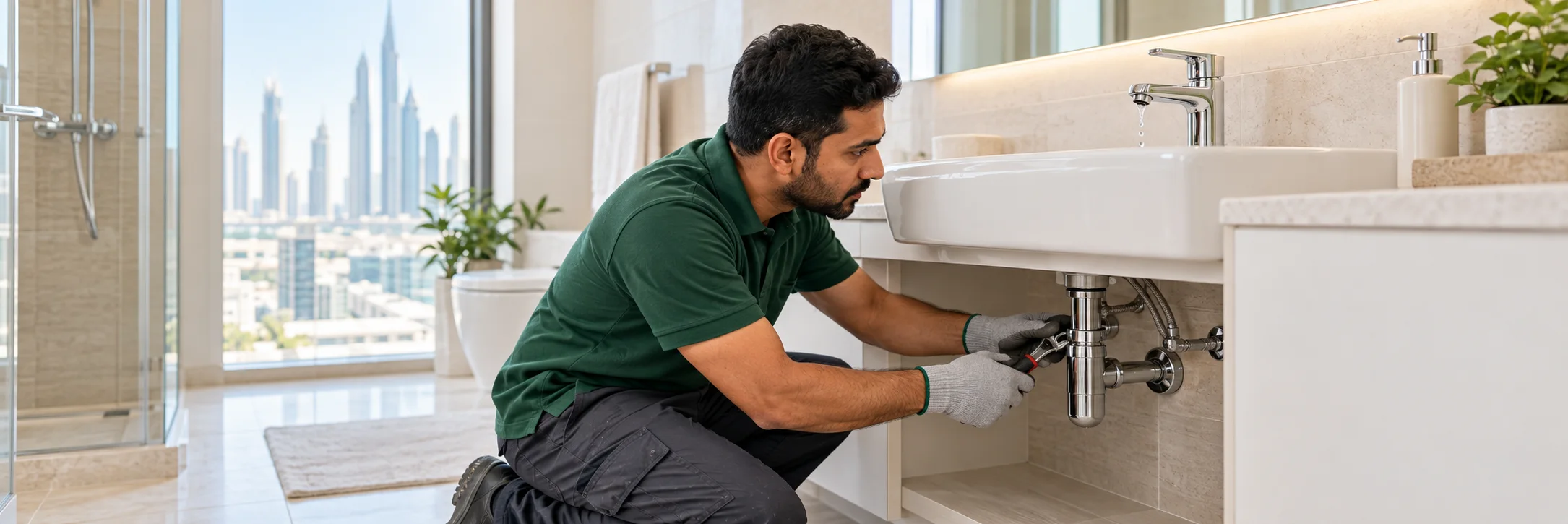
A leaking tap can look like a minor annoyance, but the visible drip may waste water, stain the basin or cabinet and become harder to contain. The right response depends on where the water appears, whether the fitting can still be used safely and whether the problem is limited to one tap or affects the wider property.
You do not need to diagnose the failed part before requesting help. Start by recording the symptom, protecting the surrounding area where safe and checking whether your landlord or building team needs to approve the work. For a contained household leak, QuickFix can review a request through Plumbing Services in Dubai.
This guide explains common possibilities, safe observations and the information that helps a plumber assess a leaking tap in a Dubai apartment or villa. It does not replace an on-site diagnosis.
First, identify where the tap is leaking
The words “leaking tap” can describe several different symptoms. Look from a normal, safe position and note the first place water becomes visible. Do not remove a handle, cartridge, decorative cover or connection to investigate.
Water dripping from the spout
A drip from the outlet continues after the handle has been placed in its normal off position. Record whether the drip is constant or intermittent and whether it changes when the handle is moved gently through its normal range.
Do not force the handle tighter. Excess pressure can damage the control or make an existing problem worse. A plumber may need to assess internal sealing components, the cartridge or the condition of the fitting before recommending a repair.
Water around the handle or tap body
Water may appear near a lever, control spindle or joint in the tap body only while the tap is running. Dry the visible surface once, use the tap normally for a short observation and note where moisture returns. Do not pry off caps or loosen fasteners.
Water collecting around the tap base
Moisture around the base may come from the tap, splash from the basin or a connection below the counter. Note whether it appears only during use and whether water is reaching an unsealed countertop edge, cabinet or wall.
Wipe up a small amount of clean water when it is safe to do so, then stop using the fitting if the area becomes wet again. Repeated exposure can affect cabinetry and finishes even when the visible leak seems small.
Water beneath the sink or inside a cabinet
A leak below the basin may involve an accessible supply connection, flexible hose, waste fitting or water travelling down from above. The point where water collects is not always its source.
Remove dry belongings from the cabinet only if you can do so without touching damaged fittings, sharp objects or electrical equipment. Place a suitable container beneath a minor clean-water drip as temporary protection, but do not disconnect or tighten a hose to test it.
Is a leaking tap an emergency?
A slow, contained drip is usually different from an uncontrolled plumbing emergency. Stop using the tap and seek prompt building, utility or emergency support when there is:
- Rapid water flow that cannot be contained
- Water spreading through a wall, ceiling or neighbouring property
- A swollen ceiling, unstable cabinet or damaged surface
- Sewage, contaminated water or a strong unexplained odour
- Water close to a socket, powered appliance or electrical fitting
- Smoke, sparking, electric shock or another immediate danger
- A valve, hose or fitting that appears ready to fail
Keep people away from water near electricity. Do not touch a wet plug or switch, enter a restricted service area or rely on a routine online booking when people or property are in immediate danger.
If you know the correct local isolation valve, it is safely accessible and building guidance permits its use, closing it may limit a serious leak. Do not experiment with an unidentified, corroded or stiff valve. For a shared supply or major leak, contact building management promptly.
Common causes a plumber may investigate
Several faults can produce similar symptoms, so the cause should not be confirmed from the drip alone. Depending on the design and location, an assessment may consider:
- A worn or damaged washer, seal or O-ring
- A cartridge or valve mechanism that no longer closes correctly
- Mineral deposits or debris affecting a sealing surface
- A loose, deteriorated or incorrectly fitted connection
- A damaged flexible hose beneath the basin
- Corrosion, cracking or wear in the tap body
- Movement at the mounting point or deterioration around the base
- Water pressure or another plumbing condition affecting the fitting
Not every tap contains the same parts. Mixer taps, separate hot-and-cold controls, sensor taps and concealed fittings require different checks. The tap brand, model and installation type can influence whether a component is serviceable and whether a matching part is available.
Avoid buying a generic cartridge or washer before the fitting has been identified. A part that looks similar may differ in dimensions, control direction or specification.
Safe checks before calling a plumber
These observations can make a tap-repair request more useful without dismantling anything.
- Confirm the affected fitting. State whether it is a kitchen sink, bathroom basin, bath, shower control, bidet spray connection or another outlet.
- Describe the leak location. Note whether water comes from the spout, handle, base, hose, cabinet or wall connection.
- Record when it happens. Explain whether it leaks while off, only during use or after another fixture is operated.
- Check the wider pattern through normal use. Mention whether another tap has also changed, but do not keep running water to reproduce the fault.
- Take clear photos. Include one wide image of the fitting and a closer image of the leak where it is safe to do so. A short video can show an intermittent drip without requiring prolonged use.
- Find any visible brand or model details. Do not move a fixed basin, crawl into an unsafe cabinet or remove the tap to search for a label.
- Note recent work. Include any recent tap installation, countertop work, plumbing repair, water interruption or change in pressure.
Do not use sealant, tape or adhesive as an improvised repair. Do not pour chemicals into the fitting, remove the aerator with unsuitable tools or open a concealed access panel. A temporary action can hide the symptom, damage the finish or complicate the eventual assessment.
Check for signs of hidden water loss
A visible drip is not the only reason to investigate. Unexpected water use, damp cabinetry, staining, a recurring musty smell or the sound of water when fixtures are off can justify a wider plumbing review.
DEWA explains that its High Water Usage Alert can indicate unusually high consumption and a possible internal leak. The alert is useful information, but DEWA also notes that it does not guarantee every leak will be detected. If you receive an alert, check the property safely, report visible damage and arrange the appropriate maintenance rather than waiting for the leak to become obvious.
Do not assume a dripping tap is the only source of increased consumption. Toilets, concealed pipework, irrigation and other connections may need separate investigation. For multiple symptoms, use the common plumbing issues guide for Dubai apartments to prepare a property-wide description.
Tenant, landlord or building management: who should you contact?
Before authorising work in a rented Dubai property, review the tenancy agreement and the maintenance process provided by the landlord or property manager. Dubai Land Department guidance says that, unless the parties agree otherwise, the landlord is responsible for maintenance and defects that affect the tenant’s intended use of the property. The agreement and the nature of the repair still matter, so do not assume responsibility from the size of the leak alone.
Send a written maintenance request and keep photos, dates and relevant messages. Ask who can approve the repair, whether an appointed contractor must be used and whether the building requires access registration or a work permit.
Contact building management first when the water may come from a shared line, service shaft, wall, ceiling or neighbouring property. A tap or hose wholly inside the apartment may follow a different process, but building rules can still govern contractor access, parking, lift use and permitted working hours.
When to book professional tap repair in Dubai
Request a plumbing assessment when:
- The tap continues dripping after normal closure
- Water returns around the handle, base or cabinet
- A hose or connection beneath the basin is wet
- The handle is stiff, loose or no longer controls the flow normally
- The fitting moves at its mounting point
- There is corrosion, cracking or recurring staining
- Water pressure or temperature behaviour has changed
- The leak returned after an earlier repair
- Access requires tools, dismantling or work inside a wall or cabinet
- You cannot identify a safe user action from the manufacturer’s instructions
A plumber should confirm whether the fitting can be repaired, needs a compatible part or should be replaced. Replacement should not be presented as automatic: the decision depends on the confirmed fault, part availability, condition of the tap and agreed scope.
What affects leaking-tap repair cost?
An exact price cannot be established from the word “drip.” The cost can depend on:
- Tap type, brand and model
- Leak location and accessibility
- Whether diagnosis requires additional testing
- Availability and specification of washers, cartridges, hoses or other parts
- Condition of the tap body and surrounding connections
- Whether the fitting can be repaired or an agreed replacement is needed
- Countertop, cabinet or concealed-access restrictions
- Separate damage or work involving plumbing outside the tap
- Building access, parking and permitted service hours
Before work begins, ask what the proposed price includes, whether parts are separate and what happens if the initial inspection identifies a different scope. If replacement is proposed, confirm who supplies the new tap, whether it is compatible with the existing installation and whether removal and disposal are included.
Information to share when booking a plumber
A complete request helps the service team review suitability and prepare for the visit. Include:
- Dubai area, building or community and property type
- Kitchen, bathroom or other affected room
- Tap type and visible brand or model where known
- Exact point where water appears
- Whether the leak happens while the tap is off, during use or both
- Approximate time the problem began
- Whether the flow, pressure or temperature has changed
- Any water beneath the sink, inside a cabinet or near electricity
- Whether other taps, drains or toilets are affected
- Recent plumbing, countertop or building work
- Clear photos or a short video taken safely
- Landlord or building approval requirements
- Parking, security, lift and working-hour restrictions
- Preferred appointment date or time window
Keep the area reasonably accessible, but leave the fitting and its connections in place. Do not remove cabinet panels or move heavy appliances to create access. Tell the team about restricted access when submitting the request.
For a contained non-emergency leak, book Plumbing Services in Dubai with the details above. Your preferred time remains subject to service-scope and appointment confirmation.
Frequently asked questions
Can I stop a dripping tap by tightening the handle harder?
No. Use the handle only through its normal range. Forcing it can damage the control without resolving the failed seal or internal component.
Does a dripping tap always need to be replaced?
Not necessarily. Some faults may be repairable with a compatible component, while a damaged, corroded or unsupported fitting may make replacement more practical. An assessment should come before the recommendation.
Should I buy a washer or cartridge before the plumber arrives?
Only if the exact part has already been confirmed for the tap model. Similar-looking components are not automatically interchangeable.
Who should a tenant call about a leaking tap in Dubai?
Check the tenancy agreement and notify the landlord or property manager through the stated maintenance process. Involve building management when shared services, another unit or building access may be affected.
Can QuickFix help with a tap leaking under the sink?
Submit photos and describe whether the water appears at the tap, hose, supply connection or waste fitting. QuickFix can review the request and confirm whether it fits the current plumbing scope before arranging a visit.
What if the sink is also draining slowly?
Mention both symptoms and stop using the fixture if water may overflow. Do not mix drain chemicals or assume the leak and blockage have the same cause. Read the blocked-drain guide for Dubai apartments for safe preparation steps.